








Owning a recreational vehicle is an investment in freedom, comfort, and adventure. Whether it is used for seasonal travel, weekend getaways, or extended journeys, an RV represents both a significant financial commitment and a lifestyle choice. However, to ensure that this investment continues to perform at its best and maintains its value over time, proper storage is essential. Effective RV storage is not merely about parking the vehicle; it involves safeguarding it from environmental damage, maintaining mechanical and electrical systems, and ensuring that it is always ready for immediate use. This article explores all aspects of RV storage, including the types available, the benefits of proper storage, essential maintenance practices, strategies to optimize space, and critical considerations when selecting a storage facility.
Understanding the Need for RV Storage
Recreational vehicles are subject to a variety of risks when not in use. Exposure to weather conditions such as sun, rain, wind, and snow can accelerate wear and tear on the exterior surfaces, tires, and interior components. UV rays can cause fading and cracking of paint and upholstery, while moisture can lead to rust, corrosion, and mold growth inside the vehicle. In addition to environmental factors, RVs are also vulnerable to security risks, including theft and vandalism, if left unattended in unsecured areas. Effective RV storage addresses these challenges by providing a controlled and secure environment that preserves the vehicle’s condition and extends its operational life.
Types of RV Storage Solutions
RV storage options are diverse, each offering a different level of protection, accessibility, and cost. Selecting the appropriate storage type depends on the value of the RV, the frequency of use, and the specific environmental challenges it faces.
Outdoor RV Storage
Outdoor storage is typically the most affordable and widely available option. It involves parking the RV in a designated lot, driveway, or open-air facility. While outdoor storage offers convenience and easy access, it exposes the vehicle to environmental elements. Owners often mitigate these risks by using high-quality RV covers, applying protective coatings to exterior surfaces, and conducting routine inspections. Outdoor storage is best suited for durable RVs, vehicles used frequently, or owners seeking a cost-effective solution with moderate protection.
Covered RV Storage
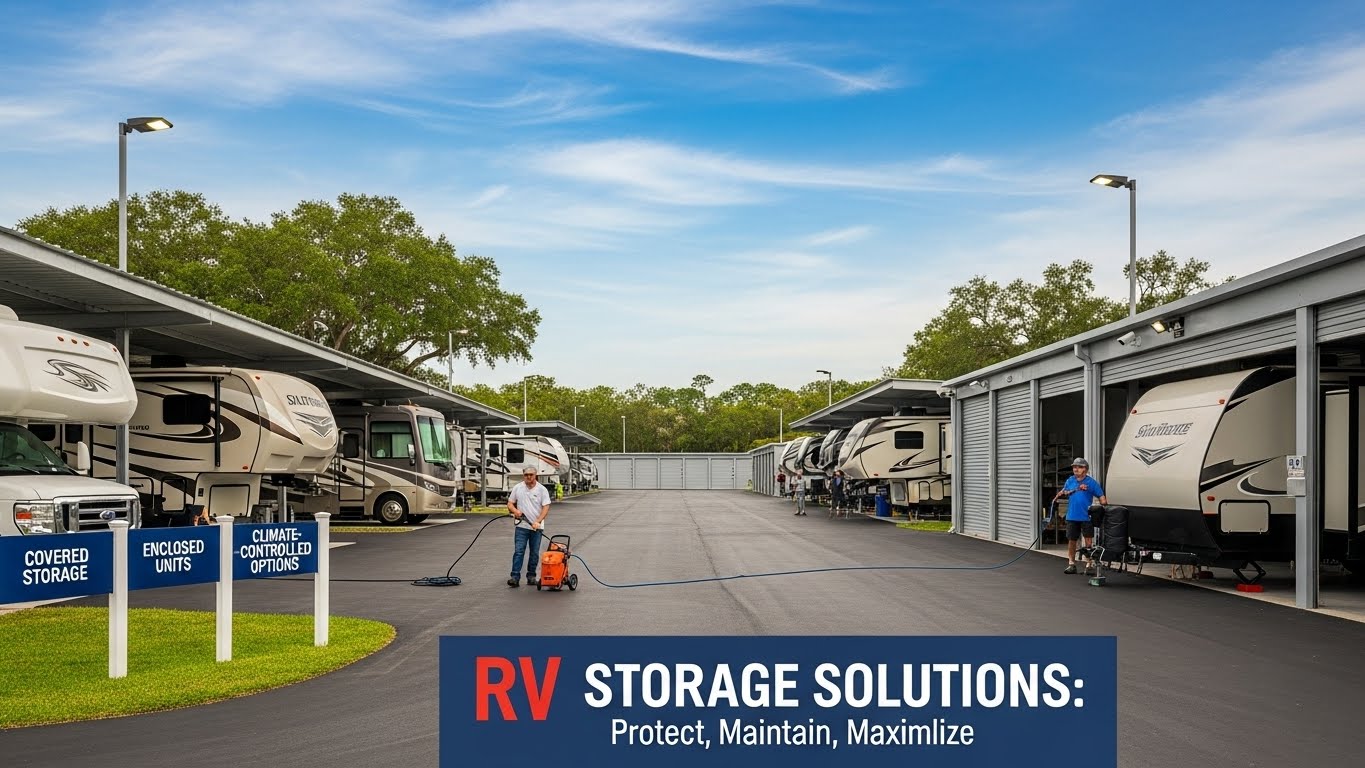
Covered storage provides a middle ground between affordability and protection. This option generally includes metal carports, canopy structures, or roofed shelters that shield RVs from direct sunlight, precipitation, and falling debris. Covered storage helps prevent fading, surface damage, and water infiltration while remaining less expensive than fully enclosed indoor facilities. This type of storage is ideal for seasonal users or owners who want additional protection without incurring the higher costs of indoor storage.
Indoor RV Storage
Indoor storage offers the highest level of protection and security. Enclosed facilities such as garages, warehouses, or climate-controlled storage units safeguard RVs from all weather conditions, theft, and vandalism. Indoor storage is particularly suitable for high-value or specialty RVs, including luxury models and vehicles with sensitive mechanical or electronic systems. Benefits include protection from moisture, UV damage, and pests, as well as enhanced security features such as surveillance cameras and controlled access. For owners prioritizing longevity, indoor RV storage is often the most practical investment.
Benefits of Proper RV Storage
Proper RV storage offers a wide range of benefits that extend beyond protection from environmental factors. One of the most significant advantages is the preservation of the vehicle’s value. RVs that are well-maintained and stored in optimal conditions maintain their appearance, functionality, and resale value over time.
Security is another critical benefit. Storage facilities designed specifically for RVs often include fencing, surveillance systems, and restricted access, reducing the risk of theft or vandalism. For owners with high-value vehicles, security considerations are a primary factor in choosing a storage solution.
Proper storage also contributes to reduced maintenance costs. RVs exposed to harsh weather conditions or left unused without protection often require extensive repairs, including tire replacement, brake servicing, and electrical system maintenance. Storage solutions that minimize environmental exposure help prevent these issues, reducing long-term expenses and ensuring that the vehicle is always ready for use.
Additionally, organized RV storage facilitates operational readiness. Owners can access their vehicles without the need for extensive preparation or emergency repairs, allowing for spontaneous travel and efficient planning. For families, seasonal travelers, and long-distance adventurers, having a well-maintained RV that is ready for immediate use enhances convenience, safety, and overall enjoyment.
Maintenance Practices for RVs in Storage
Even with high-quality storage, RVs require regular maintenance to remain in optimal condition. Key considerations include tire care, battery management, fluid checks, and protection from pests.
Tire Maintenance: Tires can develop flat spots when the RV remains stationary for extended periods. Regularly moving the vehicle or using tire cradles can prevent long-term damage. Maintaining proper tire pressure and inspecting for cracks or wear is also essential.
Battery Care: RV batteries require periodic charging to prevent depletion and damage. Disconnecting the battery during long-term storage and using trickle chargers or solar-maintenance systems helps preserve battery life.
Mechanical and Electrical Systems: Lubricating moving components, checking brake systems, and inspecting wiring and lights prevent corrosion and mechanical failures. These practices ensure that the RV remains functional and safe for travel.
Pest Prevention: Unoccupied RVs are vulnerable to rodents, insects, and other pests. Sealing entry points, using repellents, and maintaining cleanliness can prevent infestations that may damage interior components or wiring.
Protective Measures: Using high-quality RV covers, applying UV-resistant coatings, and ensuring proper ventilation within the storage facility helps protect both the exterior and interior surfaces of the vehicle from damage.
Optimizing Space in RV Storage Facilities
Efficient use of space is a vital aspect of RV storage, especially for owners with multiple vehicles or limited storage areas. Strategies include careful layout planning, the use of multi-level storage systems, and prioritization based on vehicle size and usage frequency.
Organized Layouts: Placing frequently used RVs in accessible locations while storing long-term vehicles in more compact areas ensures efficient retrieval and minimizes the risk of accidental damage during maneuvering.
Multi-Level Storage Systems: Some storage facilities employ stacking systems or lifts to maximize space utilization, allowing multiple RVs to be stored safely in a smaller footprint.
Shared Storage Facilities: For individual owners or small-scale operators, shared RV storage facilities offer cost-effective solutions while providing professional management, security, and convenience. Shared facilities often include amenities such as maintenance services, access control, and environmental protection features.
Choosing the Right RV Storage Facility
Selecting the right RV storage facility requires careful consideration of several factors beyond basic availability and cost. Security features, insurance coverage, environmental controls, access policies, and facility management quality are all critical factors. Owners of high-value or specialized RVs may prioritize climate control, surveillance, and secure access, while seasonal travelers may prioritize affordability and convenient access. Evaluating these factors ensures that the chosen storage solution meets both short-term needs and long-term preservation goals.
Sustainability in Modern RV Storage
Sustainability is becoming an important aspect of modern RV storage solutions. Facilities incorporating energy-efficient lighting, solar power, water management systems, and environmentally friendly construction materials reduce the ecological footprint of storage operations. By minimizing maintenance requirements and extending the lifespan of RVs, sustainable storage solutions also contribute indirectly to resource conservation and environmental protection.
Conclusion
Investing in proper RV storage is a strategic decision that safeguards both the vehicle and the investment it represents. Effective storage preserves the appearance and functionality of RVs, reduces maintenance costs, enhances security, and ensures operational readiness for spontaneous travel or seasonal use. Understanding the types of storage available, implementing preventive maintenance practices, optimizing storage space, and selecting a facility that meets individual needs are all critical components of responsible RV ownership.
Whether for personal recreational use, seasonal travel, or long-term adventures, prioritizing RV storage ensures that the vehicle remains in excellent condition, ready for any journey, and capable of providing years of enjoyment. By combining thoughtful storage practices with regular maintenance and careful planning, RV owners can maximize the lifespan, safety, and value of their vehicles while enjoying peace of mind and convenience.