






A roof is far more than just a cover over a home; it serves as a vital barrier against environmental elements, contributing to the safety, comfort, and energy efficiency of a property. It shields interiors from rain, snow, wind, and extreme sunlight while regulating temperature and preventing moisture accumulation that can lead to mold, rot, or structural deterioration. Over time, natural wear and tear, combined with harsh weather conditions and temperature fluctuations, can cause shingles or tiles to crack, curl, or become loose, compromising the roof’s ability to protect the home effectively. Delayed attention to such issues often results in leaks, water damage, decreased energy efficiency, and the need for more extensive repairs. For homeowners, understanding the integral role of a roof is essential when considering upgrades, and a well-executed roof replacement ensures both immediate protection and long-term reliability. Upgrading a roof is a strategic investment that strengthens the home’s structural integrity, improves energy efficiency, and enhances visual appeal while safeguarding against future issues.
Selecting the Ideal Roofing Material for Longevity and Performance
One of the most significant factors in any roof upgrade is selecting the appropriate roofing material, as this decision directly affects durability, insulation, maintenance, and aesthetic appeal. Asphalt shingles remain a popular choice due to affordability, ease of installation, and reliable performance under various weather conditions. They are available in numerous colors and textures, allowing homeowners to match their roof with the style of their home. Metal roofing is widely recognized for its exceptional lifespan, fire resistance, and energy efficiency, reflecting sunlight and reducing heat absorption to help lower cooling costs. Clay and concrete tiles are durable and fire-resistant, providing unique visual appeal but requiring a sturdy structural framework due to their weight. Slate offers unparalleled elegance and longevity, often lasting for decades with proper care, though it demands professional installation expertise. Each material brings unique benefits and considerations, making thoughtful selection essential for a roof that performs effectively, enhances the home’s appearance, and remains reliable for years to come.
The Importance of Professional Roof Assessment
Before undertaking a roof replacement, it is crucial to conduct a thorough professional inspection to evaluate the condition of the existing roof. Professionals examine shingles or tiles, underlayment, flashing, ventilation, and structural components to identify any hidden issues that could compromise the performance of a new roof. Moisture intrusion, rot, sagging, or insulation gaps are common concerns that need attention before installation. Assessing the roof’s pitch, drainage patterns, and compatibility with the chosen materials ensures that the replacement process addresses both visible and underlying problems. A detailed assessment minimizes the risk of unexpected complications, reduces unnecessary expenses, and guarantees that the new roof will provide long-term protection, energy efficiency, and durability.
Preparing for a Seamless Roof Replacement Process
Preparation is essential to ensure an efficient and safe roof replacement. Homeowners should clear surrounding areas of outdoor furniture, landscaping features, and debris that could obstruct the work area. Roof access should be safe and unhindered to allow professionals to maneuver materials and tools efficiently. Weather conditions also play a significant role, as excessive rain, high winds, or snow can delay installation or compromise the quality of work. Working with experienced contractors ensures adherence to safety standards, proper material handling, and efficient project execution. Proper preparation supports a smooth workflow and contributes to a successful roof replacement that maximizes both safety and long-term performance.
Step-by-Step Process of Roof Replacement
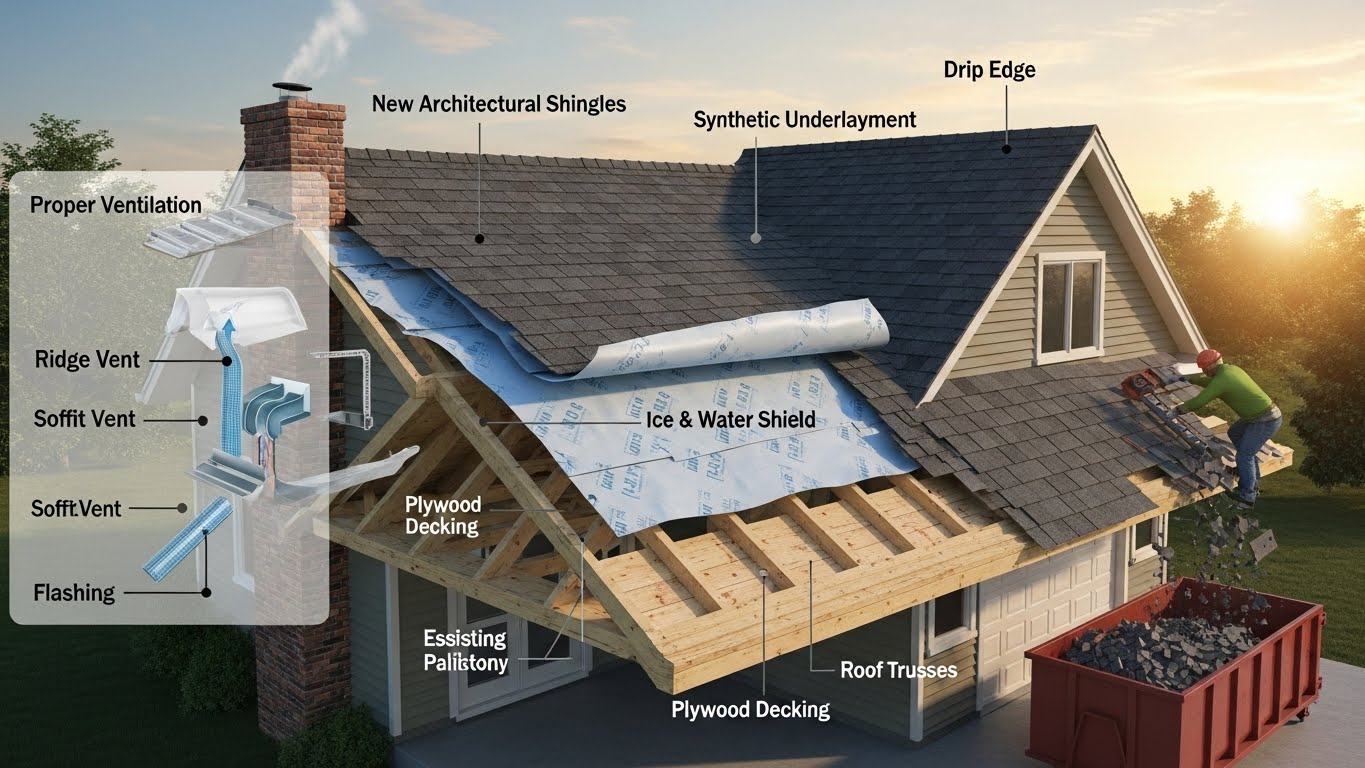
A professional roof replacement involves a series of carefully coordinated steps designed to ensure longevity, protection, and a polished finish. The process begins with the removal of the existing roofing material, including shingles, underlayment, flashing, and any damaged structural components. This step reveals the underlying roof deck and allows for inspection and repair of any structural deficiencies, including rot, warping, or weak decking. Next, a high-quality underlayment is installed to provide an additional moisture barrier. Proper flashing is applied around chimneys, vents, and edges to prevent water intrusion. The new roofing material is then installed with precise alignment, fastened securely, and inspected for consistency, coverage, and durability. Gutters, downspouts, and ventilation systems are adjusted or reinstalled to ensure proper drainage and airflow. This methodical process guarantees that each element functions correctly, providing long-term protection, improved energy efficiency, and enhanced curb appeal.
Maximizing Roof Longevity Through Maintenance
Maintaining a new roof is crucial to preserving its functionality and protecting the investment made during a roof replacement. Regular inspections help detect minor issues such as loose shingles, small leaks, or worn flashing before they escalate into more significant problems. Cleaning debris from gutters, downspouts, and the roof surface prevents water buildup and potential damage. Ensuring proper attic ventilation helps balance temperatures and prevent moisture accumulation that can compromise roofing materials. Routine professional evaluations provide an extra layer of security by identifying structural or material concerns that may not be visible to homeowners. Through consistent maintenance and proactive attention, a roof can provide protection, energy efficiency, and aesthetic appeal for decades, maximizing the value of the investment.
Common Mistakes to Avoid During Roof Upgrades
Homeowners often make mistakes during roof replacement projects that can affect long-term performance and durability. One frequent error is choosing materials based solely on cost, neglecting quality, lifespan, and energy efficiency. Hiring inexperienced contractors or those lacking proper licensing can lead to installation issues, leaks, and accelerated wear. Skipping thorough inspections or attempting DIY roof replacement poses serious risks to both safety and structural integrity. Failing to address underlying damage, such as rotting decking or faulty insulation, can compromise the new roof’s effectiveness. Avoiding these pitfalls through careful material selection, professional guidance, and strategic planning ensures a successful project that provides reliable protection and long-term benefits.
Enhancing Home Value and Efficiency Through Roof Upgrades
A roof replacement not only safeguards the home but also contributes significantly to energy efficiency and property value. High-quality roofing materials and professional installation improve insulation, reduce heat absorption, and help maintain consistent indoor temperatures. Modern roofing solutions, such as reflective coatings and ventilated systems, optimize energy performance and reduce HVAC strain. A visually appealing roof enhances the home’s exterior aesthetic, boosting curb appeal and potential resale value. Thoughtful investment in a durable, efficient roof ensures long-term comfort, safety, and financial benefits, making it one of the most impactful improvements a homeowner can undertake.
Conclusion: Roof Replacement as a Strategic Long-Term Investment
A well-planned roof replacement is a critical step in protecting and enhancing a home. Choosing durable materials, conducting thorough assessments, preparing the property, and relying on skilled professionals ensures long-term performance, energy efficiency, and structural integrity. By avoiding common mistakes and maintaining the roof through routine inspections and care, homeowners can enjoy decades of reliable protection, aesthetic enhancement, and improved property value. A professional and thoughtful roof replacement is more than a repair; it is a strategic investment in comfort, security, and long-term financial value, providing peace of mind and lasting benefits for any homeowner.