










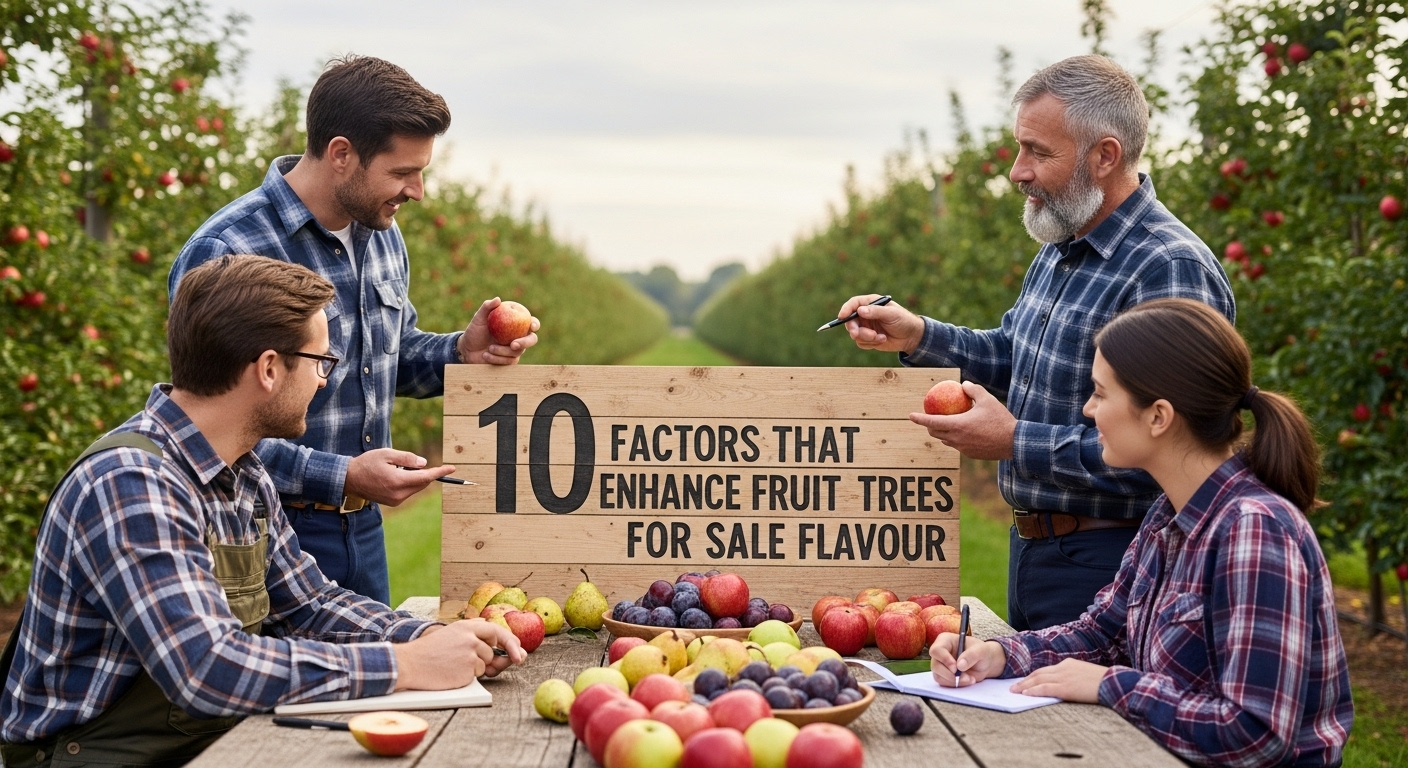
Across the UK, orchard professionals agree that flavour is the outcome of a series of connected decisions made over many years, from soil preparation to harvest timing. British conditions bring particular challenges, including variable summers, heavy soils, and inconsistent rainfall, yet they also offer opportunities to produce fruit with depth, balance, and character. This article brings together professional insights into the practical factors that most influence flavour in apples and other fruit, drawing on orchard practice rather than theory.
Early decisions often matter more than later interventions. Many home gardeners begin with enthusiasm, browsing fruit trees for sale and selecting attractive varieties, but long-term flavour depends on how well those trees are matched to their environment and managed throughout the season. Understanding what actually enhances flavour allows gardeners and orchard managers alike to focus their efforts where they matter most.
Specialist growers from ChrisBowers emphasise that flavour development begins before a tree is planted and continues right through to harvest and storage. Advice from professional nursery growers highlights the importance of choosing appropriate rootstocks and varieties suited to UK conditions, with particular attention to soil type and local climate. According to the fruit tree specialists, selecting proven varieties with known flavour profiles and establishing them correctly from the outset remains one of the most reliable ways to achieve consistently good results. This guidance aligns closely with best practice outlined for apple trees where suitability, planting depth, and early care are treated as foundational to fruit quality.
Soil Health as the Foundation of Flavour
Professionals consistently point to soil health as the single most influential factor in fruit flavour. Flavour compounds develop in response to balanced nutrition, adequate moisture, and active soil biology. In many parts of the UK, soils are heavy or compacted, limiting root growth and nutrient uptake. Where roots struggle, flavour inevitably suffers.
Well-structured soil allows roots to access both nutrients and oxygen. Orchard managers often focus on improving soil before planting, incorporating organic matter such as composted manure or green waste to improve texture and microbial activity. Over time, this encourages steady nutrient release rather than rapid growth spurts that dilute flavour.
pH also plays a role. Apples, pears, and plums generally prefer slightly acidic to neutral soils. When pH is out of balance, trees may absorb nutrients inefficiently, leading to bland or underdeveloped fruit. Professionals regularly test soil and make adjustments gradually, avoiding dramatic changes that can stress trees.
Moisture management is equally important. Waterlogged soil reduces oxygen availability, while drought restricts nutrient transport. Both conditions can lead to poor flavour. In commercial orchards, drainage improvements are often prioritised, while mulching is used to stabilise moisture levels. Home gardeners can adopt similar practices, particularly in clay soils common across much of England.
Healthy soil supports diverse microbial life, which helps convert organic matter into forms trees can use. This slow, steady feeding encourages balanced growth and allows flavour compounds to accumulate gradually within the fruit, rather than being diluted by excessive water uptake or nitrogen-driven growth.
Variety Selection and Rootstock Influence
Not all fruit varieties are capable of exceptional flavour under UK conditions, regardless of care. Orchard professionals emphasise the importance of choosing varieties bred or selected for taste rather than yield alone. Many older or traditional British apple varieties are valued precisely because they perform well in cooler summers, developing complex flavours without excessive sugar.
Rootstock choice is equally significant but often overlooked by home growers. Rootstocks control tree vigour, root depth, and nutrient uptake. A vigorous rootstock may produce large crops quickly, but flavour can be compromised if growth is excessive. Conversely, weaker rootstocks encourage smaller trees with fruit that often develops more concentrated flavour.
Professionals match rootstock to soil type, rainfall patterns, and management style. In fertile soils, a more controlling rootstock prevents excessive vegetative growth, allowing the tree to direct energy into fruit development. In poorer soils, a slightly more vigorous rootstock may be necessary to maintain tree health without sacrificing flavour.
Pollination compatibility also affects flavour indirectly. Poor pollination can lead to misshapen fruit that ripens unevenly, resulting in inconsistent taste. Orchard planners carefully select pollination partners to ensure even fruit set and development, a practice that home gardeners can replicate with informed variety choices.
Variety selection should also consider harvest timing. Early-season apples may lack complexity compared to later varieties that benefit from longer ripening periods. Professionals often grow a mix, understanding that flavour peaks vary throughout the season and that patience is rewarded with depth and balance.
Pruning, Canopy Management, and Sunlight
Light exposure plays a direct role in flavour development. Sugars accumulate through photosynthesis, while colour and aroma compounds are enhanced by sunlight. Orchard professionals invest significant effort in pruning systems that maximise light penetration without exposing fruit to sunburn.
In the UK, where light levels can be limited, open canopies are particularly important. Dense growth shades fruiting wood, reducing sugar accumulation and leading to flat flavours. Regular, considered pruning encourages a balance between new growth and fruiting spurs, ensuring light reaches developing fruit.
Timing matters as much as technique. Winter pruning stimulates growth, while summer pruning can help control vigour and improve light exposure during the critical period of fruit development. Professionals use both approaches strategically, adjusting each year based on tree performance and weather conditions.
Tree shape also influences airflow, which affects disease pressure. Reduced disease means leaves function more efficiently, supporting better flavour development. Healthier trees allocate resources more effectively, allowing fruit to mature fully rather than being harvested early due to disease concerns.
For home growers, adopting simple open-centre or spindle forms can make a noticeable difference. Even modest improvements in light exposure can lead to sweeter, more aromatic fruit, demonstrating how closely canopy management and flavour are linked.
Nutrition, Water, and Growth Balance
Balanced nutrition underpins flavour, yet overfeeding is a common mistake. Excess nitrogen encourages lush growth at the expense of fruit quality, producing large but watery apples with muted taste. Orchard professionals aim for steady, moderate growth rather than rapid expansion.
Leaf analysis is commonly used in commercial orchards to fine-tune nutrient levels. While home gardeners may not take this approach, observing growth patterns can provide clues. Excessively long shoots and dark green leaves often indicate too much nitrogen.
Potassium plays a key role in sugar transport and flavour development. Deficiencies can result in fruit with poor sweetness and storage quality. Many UK soils contain adequate potassium, but light or sandy soils may require supplementation. Professionals apply nutrients based on measured need rather than routine schedules.
Water management is closely tied to nutrition. Irregular watering leads to fluctuating fruit size and diluted flavour. Consistent moisture during fruit development allows sugars and acids to balance naturally. Mulching is widely used to reduce evaporation and moderate soil temperature.
Stress, within limits, can enhance flavour. Mild water stress towards the end of the season can concentrate sugars, but excessive stress risks fruit drop and poor tree health. Experienced growers read their trees carefully, adjusting irrigation to support flavour without compromising long-term productivity.
Crop Load, Thinning, and Maturity
One of the clearest links between management and flavour lies in crop load. Trees carrying too many fruits struggle to supply each one adequately, resulting in smaller, less flavourful produce. Orchard professionals routinely thin fruit early in the season to improve size and taste.
Thinning allows remaining fruit to receive more carbohydrates, minerals, and sunlight. It also helps prevent biennial bearing, where heavy crops one year lead to poor flowering the next. Consistent cropping supports steady flavour development year after year.
Timing of thinning is important. Early thinning, shortly after fruit set, has the greatest impact on flavour. Late thinning may improve size but has less influence on taste. Professionals often combine chemical and hand thinning, though home growers typically rely on manual methods.
Harvest timing is equally critical. Fruit picked too early lacks sweetness and aroma, while overripe fruit can taste bland or overly soft. Orchard managers assess maturity using starch tests, colour development, and taste sampling rather than calendar dates alone.
In the UK’s variable climate, ripening can differ significantly between seasons. Professionals adjust harvest dates accordingly, recognising that flavour peaks within a relatively narrow window. Home gardeners who taste fruit regularly often achieve better results than those who harvest everything at once.
Climate, Seasonality, and Post-Harvest Handling
British weather shapes flavour in subtle ways. Cool nights help retain acidity, contributing to balanced taste, while warm days promote sugar accumulation. Orchard professionals accept that no two seasons are identical and adapt management practices to prevailing conditions.
In wet summers, disease pressure may reduce leaf function, limiting flavour development. Preventative care and good airflow become particularly important. In dry years, irrigation and mulching help sustain growth and prevent stress-related flavour loss.
Post-harvest handling also affects perceived flavour. Apples continue to develop flavour compounds after picking, particularly during short storage periods. Professionals store fruit under conditions that maintain firmness and prevent moisture loss, preserving taste.
Some varieties benefit from a period of storage before reaching peak flavour. Understanding these characteristics allows growers to enjoy fruit at its best rather than judging it prematurely. Home growers often discover that patience after harvest improves eating quality significantly.
Ultimately, flavour reflects the cumulative effect of many small decisions. UK orchard professionals emphasise observation, restraint, and responsiveness rather than rigid routines. By focusing on soil health, balanced growth, appropriate variety choice, and careful harvest timing, both commercial growers and home gardeners can consistently produce fruit with depth and character suited to British conditions.