









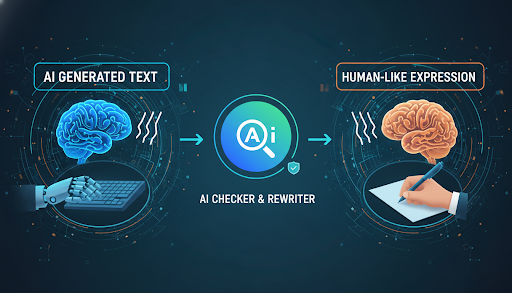
AI speeds things up, but speed has a cost. Writers notice it when a draft feels finished yet somehow unsafe to submit. The sentences behave, the logic holds, but the voice feels borrowed. Dechecker exists in that uncomfortable pause before publishing, helping writers decide what needs fixing and what can stay.
The Moment Writers Start Distrusting Their Own Drafts
When fluency becomes a warning sign
Many writers describe the same moment. They reread a paragraph and realize it flows a little too smoothly. There are no sharp edges, no hesitation, no small imperfections that usually appear when a human thinks while writing. That’s often when they reach for an AI Checker to confirm whether the unease is justified or just anxiety.
The result isn’t always alarming, but it’s rarely meaningless.
Experience teaches pattern recognition
After reviewing dozens of AI-assisted drafts, writers begin to recognize familiar shapes. Paragraphs land at similar lengths. Claims balance each other too politely. Conclusions soften instead of commit. Dechecker doesn’t invent these observations; it formalizes them so writers can respond with intent instead of instinct.
Why ignoring the feeling usually backfires
Publishing text that “might be fine” often leads to delayed problems. Editors ask vague questions. Readers skim without engaging. Performance drops without a clear reason. Running detection earlier costs minutes. Fixing reputation or rankings later costs far more.
How Dechecker Frames AI Detection Differently
Detection as feedback, not judgment
Some tools treat AI detection like exposure. Dechecker treats it like review. The AI Checker highlights probability and structure, leaving decisions to the writer. That difference matters because it keeps the process constructive.
Writers stay curious instead of defensive.
Seeing where AI habits actually live
High AI likelihood rarely spreads evenly. It clusters. Introductions often show it first, followed by summaries and generic transitions. Dechecker makes those clusters visible, allowing writers to focus effort where it matters most.
Precision beats panic.
Using signals to guide revision effort
Not every flagged sentence needs attention. Dechecker helps writers decide which sections affect credibility and which simply reflect efficiency. That judgment saves time and preserves voice.
Rewriting Without Erasing Intent
The temptation to overcorrect
Once AI detection confirms suspicion, many writers rewrite too much. They swap words aggressively, change tone mid-article, or add complexity that wasn’t needed. The draft becomes noisy instead of human.
Restraint matters more than creativity here.
Subtle changes that shift perception
Small adjustments often carry the most weight. Varying sentence openings, introducing specific observations, or tightening a claim can break AI rhythm without altering meaning. Dechecker makes it easier to spot where these small moves will matter.
Humanizing text without rewriting ideas
In targeted sections where tone still feels mechanical, using the AI Humanizer helps reshape phrasing while preserving the original thought. It works best when applied selectively, not globally, acting more like polishing than replacement.
Content Creation Under Real Constraints
Writing fast without sounding rushed
Content teams rely on AI to keep pace. The challenge isn’t volume; it’s sameness. Over time, posts begin to echo each other in tone and structure. AI Checker helps teams catch that repetition before readers do.
Variation becomes deliberate again.
Editorial feedback becomes clearer
Editors often struggle to articulate why a draft feels wrong. Detection results give them language. Instead of vague comments, they can point to specific sections where AI patterns dominate and suggest focused revision.
Conversations improve when feedback is concrete.
Protecting brand voice at scale
Brand voice erodes quietly. One AI-heavy draft rarely causes harm, but dozens will. Dechecker helps teams audit tone consistently, keeping language aligned even as output grows.
Academic Writing and Student Use
Students navigating new scrutiny
Students increasingly use AI for brainstorming or drafting. The risk isn’t misconduct; it’s perception. Assignments that read too generically attract attention even when ideas are original.
An AI Checker gives students a chance to adjust tone before submission.
Preserving ideas while improving ownership
Most academic issues flagged by detection stem from phrasing, not thinking. Dechecker allows students to revise language without changing arguments, making the work feel owned rather than assembled.
Confidence improves along with clarity.
Supporting learning instead of suspicion
For educators, tools like Dechecker shift focus back to writing quality. Discussions center on expression and structure rather than accusation. That benefits everyone involved.
Professional Documents That Carry Risk
Reports that need accountability
Business reports and proposals often start as AI drafts. Stakeholders expect responsibility in these documents. Language that sounds templated undermines trust even when data is solid.
AI Checker helps identify where wording weakens authority.
Internal communication and tone
Memos and updates may not be public, but they shape culture. Overly neutral, AI-like language can feel distant. Dechecker highlights sections where tone drifts, allowing writers to restore directness.
When “clear” isn’t enough
Clarity matters, but presence matters more. Professional writing needs decisions, not just balance. Dechecker helps writers notice where language avoids commitment and revise accordingly.
SEO, Engagement, and Long-Term Visibility
Search engines follow readers
Algorithms evolve, but engagement signals persist. Content that feels generic loses attention quickly. AI-generated text left untouched often performs poorly despite optimization.
Using AI Checker early helps align tone with human reading behavior.
Structural sameness hurts quietly
AI favors symmetry. Headings mirror each other. Paragraphs resolve predictably. Over time, this structure feels artificial. Dechecker surfaces excessive regularity so writers can introduce natural variation.
Preparing content for longevity
Trends change. Detection thresholds shift. Writing that reflects human choice rather than automated balance ages better. Dechecker supports that longevity by encouraging intentional revision.
Building a Sustainable Writing Workflow
Separating drafting from evaluation
AI drafts work best when treated as raw material. Dechecker becomes the evaluation stage, not the creation engine. This separation keeps writers in control of voice and direction.
Process clarity reduces friction.
Learning through repetition
Writers who use AI Checker regularly begin to anticipate its feedback. Sentence variety improves instinctively. Overly neutral phrasing declines. The tool teaches pattern awareness over time.
Dependence decreases as skill grows.
Publishing with fewer doubts
The final benefit is psychological. When detection results align with revision choices, hesitation fades. Writers publish knowing the text reflects judgment, not automation.
That assurance often shows in how the content is received.
Writing That Sounds Like Someone Meant It
AI isn’t the enemy of good writing. Unexamined drafts are. Dechecker fits into the final, human step where intention matters more than speed. With AI Checker clarifying risk and careful revision restoring voice, writers move forward without guessing.
And readers can feel that difference, even if they never name it.