










In any construction project, whether residential, commercial, or industrial, the role of a general contractor is indispensable. Often underestimated, a general contractor serves as the backbone of a project, overseeing every detail, coordinating multiple teams, and ensuring that construction progresses smoothly from concept to completion. Without a skilled general contractor, even well-planned projects can encounter delays, cost overruns, and quality issues. Understanding the responsibilities, benefits, and value a general contractor brings to a construction project is crucial for anyone looking to achieve a successful outcome.
Defining the Role of a General Contractor
A general contractor is essentially the project manager for a construction endeavor. They serve as the central point of contact between the client, architects, engineers, subcontractors, and suppliers. Their primary goal is to ensure that the construction project is executed efficiently, safely, and within the allocated budget and timeline.
One of the core responsibilities of a general contractor is to manage the planning and coordination of the project. This includes estimating costs, developing a realistic schedule, and identifying potential risks. A general contractor’s expertise allows them to foresee challenges before they arise, making adjustments that prevent delays or unexpected expenses.
Beyond planning, the general contractor manages the day-to-day operations on the construction site. They supervise subcontractors such as electricians, plumbers, and carpenters, ensuring that all work meets quality and safety standards. This oversight is crucial because multiple trades often work simultaneously on a project, and miscommunication or poor coordination can lead to significant setbacks.
Key Responsibilities of a General Contractor
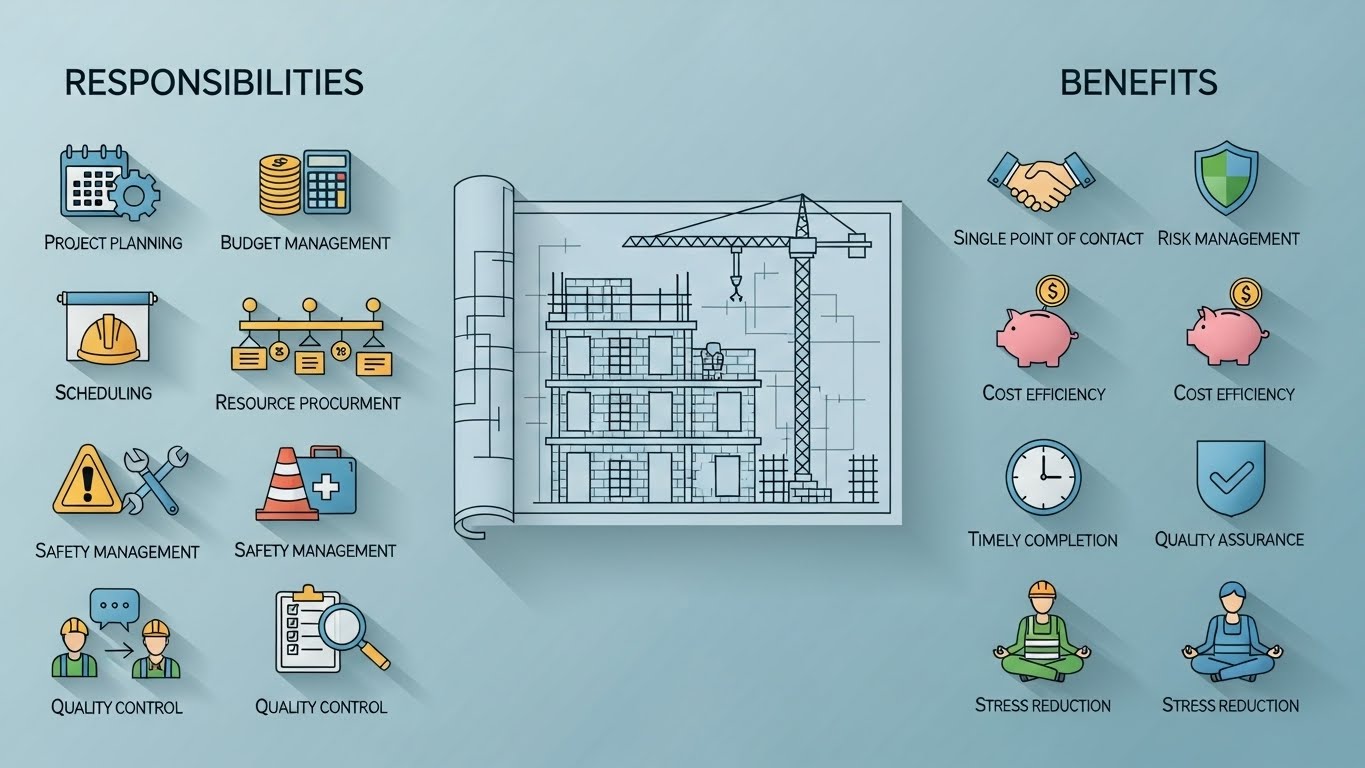
The responsibilities of a general contractor extend beyond simple site supervision. At the beginning of a project, they evaluate the scope of work, prepare detailed budgets, and establish a construction timeline. These steps are vital to provide a clear roadmap for the entire project.
Another important responsibility is subcontractor management. A general contractor hires, schedules, and oversees subcontractors, ensuring that each specialist performs their tasks efficiently and meets the project’s standards. They are also responsible for obtaining necessary permits, ensuring compliance with building codes, and maintaining a safe work environment.
Additionally, a general contractor often coordinates procurement and delivery of materials. Timely availability of supplies is critical for keeping the project on schedule. By managing logistics, a general contractor minimizes downtime and prevents costly delays caused by missing materials or equipment.
Benefits of Hiring a General Contractor
Engaging a general contractor offers numerous advantages for anyone undertaking a construction project. First and foremost, they provide a single point of contact. This simplifies communication between all parties involved, from the client to subcontractors and suppliers. Instead of managing multiple contacts independently, the client can rely on the general contractor to coordinate efforts and relay updates.
Risk management is another significant benefit. Construction projects are inherently unpredictable, with risks ranging from labor shortages to weather disruptions. A skilled general contractor anticipates these challenges and develops contingency plans to mitigate their impact. This proactive approach reduces stress and safeguards both the timeline and the budget.
Quality control is also a critical advantage of hiring a general contractor. They ensure that all work meets established standards, inspect materials, and verify that construction methods are correct. This oversight protects the client’s investment and results in a finished product that aligns with the project’s specifications.
Project Management Expertise
A general contractor expertise in project management is one of their most valuable attributes. Effective project management includes detailed scheduling, budgeting, resource allocation, and progress tracking. By maintaining a well-organized schedule, the general contractor ensures that each phase of construction proceeds without unnecessary delays.
Budget management is another critical aspect of project management. General contractors monitor expenditures, negotiate with suppliers, and identify cost-saving opportunities while maintaining high standards of quality. This financial oversight prevents budget overruns and ensures that the project remains financially viable from start to finish.
Modern general contractors also leverage advanced project management tools. Digital platforms allow them to track progress in real time, communicate efficiently with teams, and maintain accurate documentation. These tools improve transparency and provide clients with a clear understanding of the project’s status at any given time.
Choosing the Right General Contractor
Selecting the right general contractor is a crucial decision that significantly affects a project’s success. Experience is a key factor contractors with a proven track record are more likely to deliver high-quality results. Reviewing references and past project portfolios provides valuable insight into a contractor’s expertise and reliability.
Licensing and insurance are also essential. A licensed general contractor complies with local regulations and possesses the technical knowledge required to navigate building codes. Insurance coverage protects both the contractor and the client from potential liabilities, providing peace of mind throughout the construction process.
Communication skills should not be overlooked. A general contractor must clearly convey project plans, expectations, and potential issues to clients, subcontractors, and suppliers. Strong communication fosters collaboration and prevents misunderstandings that could lead to delays or conflicts.
Common Misconceptions About General Contractors
Despite their critical role, several misconceptions about general contractors persist. One common myth is that hiring a general contractor is an unnecessary expense. In reality, the expertise, oversight, and coordination provided by a general contractor often save money in the long run by preventing costly mistakes and inefficiencies.
Another misconception is that general contractors are only necessary for large projects. In truth, even small-scale renovations or residential constructions benefit from the organization and management a general contractor provides. Any project involving multiple trades or complex logistics can benefit from their oversight.
Finally, some assume that a general contractor’s role diminishes once construction begins. On the contrary, they remain actively involved throughout the project, from initial planning to post-construction inspections, ensuring that the final outcome meets or exceeds expectations.
The Future of General Contracting
The construction industry is evolving rapidly, and so is the role of the general contractor. Advances in technology, such as building information modeling (BIM), drones, and AI-driven project management tools, are transforming how construction projects are planned and executed. These innovations allow general contractors to improve accuracy, efficiency, and communication among all stakeholders.
Sustainability is another growing priority in construction. General contractors play a critical role in implementing eco-friendly practices, from sourcing sustainable materials to optimizing energy efficiency. By adopting these practices, a modern general contractor ensures that projects meet environmental standards while maintaining high quality and cost-effectiveness.
Conclusion
A general contractor is far more than a construction supervisor; they are the central figure in ensuring the success of a project. Their responsibilities span planning, coordination, risk management, and quality control, making them indispensable for projects of any size. By hiring a qualified general contractor, clients gain a trusted partner who navigates the complexities of construction, safeguards investments, and delivers high-quality results on time and within budget.
From managing schedules and budgets to coordinating subcontractors and ensuring compliance with building codes, the value of a general contractor cannot be overstated. For anyone seeking a smooth, efficient, and successful construction project, the expertise of a general contractor is not just beneficial it is essential. By understanding their critical role, responsibilities, and benefits, clients can make informed decisions that lead to the successful realization of their construction vision.
A general contractor ensures that every aspect of a construction project is executed with precision, efficiency, and professionalism, providing peace of mind and a finished product that meets the highest standards.