









Crime scenes are often distressing, hazardous, and difficult to manage. Beyond the emotional impact, these environments pose serious health risks due to the presence of blood, bodily fluids, biohazardous materials, and chemical contaminants. Effective management of such scenes requires specialized knowledge, equipment, and protocols, which is why professional crime scene cleanup is essential. This specialized service goes far beyond ordinary cleaning; it involves carefully removing biological hazards, sanitizing affected areas, and restoring spaces to safe and functional conditions while maintaining respect for the victims and their families. Understanding the principles, procedures, and importance of crime scene cleanup is vital for property owners, law enforcement agencies, and facility managers.
Understanding the Hazards
Crime scenes present unique dangers due to the presence of potentially infectious materials. Bloodborne pathogens such as HIV, Hepatitis B, and Hepatitis C can survive outside the body under certain conditions, making untrained cleanup extremely hazardous. Bodily fluids, tissue, and other biohazards can compromise surfaces and linger in porous materials, posing long-term health risks. Additionally, chemical residues, gunshot residue, or hazardous cleaning byproducts can further complicate the remediation process. Attempting to clean a crime scene without proper training or equipment can result in contamination, injury, or even legal liability.
The Crime Scene Cleanup Process
Professional crime scene cleanup is a multi-step process designed to ensure safety, thoroughness, and compliance with legal and health standards. The first step is assessment and containment. Cleanup professionals evaluate the scene to identify all areas affected by biohazardous material. Containment measures are implemented to prevent the spread of pathogens or contamination to unaffected areas. This often involves isolating rooms, using negative air pressure machines, and deploying physical barriers to maintain controlled work zones.
Once containment is established, technicians begin the removal of biohazards. Specialized tools, absorbent materials, and regulated disposal containers are used to safely extract blood, bodily fluids, tissue, and other contaminated materials. All waste is handled according to federal, state, and local regulations governing biohazard disposal. This ensures not only safety but also legal compliance, which is a critical aspect of professional crime scene cleanup.
Cleaning, Sanitizing, and Deodorizing
After removal, the affected surfaces are thoroughly cleaned and disinfected. High-grade antimicrobial cleaners, enzymatic solutions, and hospital-grade disinfectants are applied to all surfaces, including floors, walls, furniture, and fixtures. Porous materials such as carpets, upholstery, or fabrics may require special treatment or removal to eliminate hidden contaminants. Advanced cleaning technologies, such as ozone generators or hydroxyl generators, can neutralize odors caused by decomposition, smoke, or chemical residues. Proper deodorization is essential not only for comfort but also to restore the space to a livable and safe condition.
Equipment and Safety Protocols
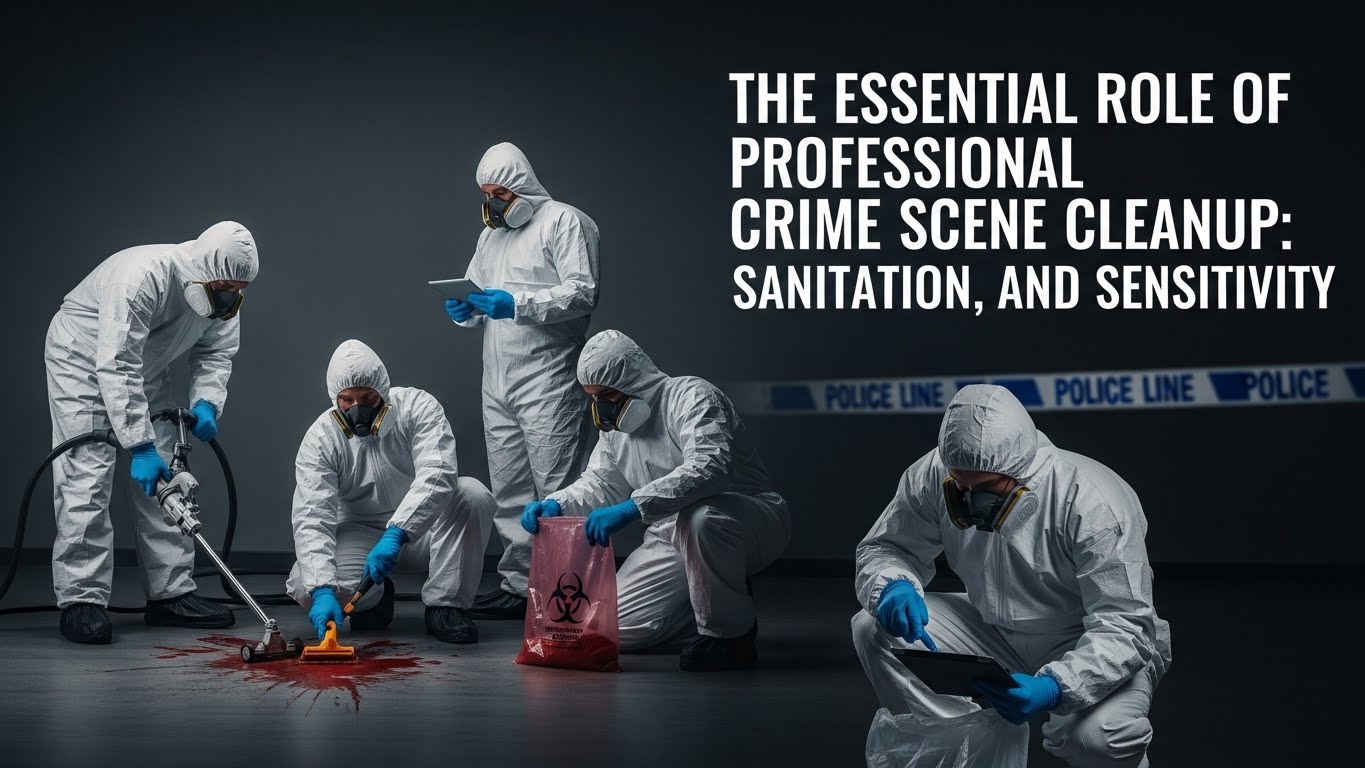
Safety is paramount in crime scene cleanup. Technicians wear full personal protective equipment (PPE), including gloves, respirators, eye protection, and protective suits, to minimize exposure to pathogens and chemical agents. Tools such as HEPA-filtered vacuum systems, industrial-grade cleaners, and containment equipment ensure the removal of both visible and microscopic hazards. Decontamination protocols are strictly followed to prevent cross-contamination between the cleanup site and other areas. Safety and compliance with OSHA, EPA, and CDC guidelines are fundamental to professional practice in this field.
Handling Psychological and Emotional Challenges
Crime scene cleanup is not just a technical process it also requires sensitivity and professionalism. Technicians often encounter emotionally charged environments, including violent crime scenes, unattended deaths, or traumatic incidents. Professional cleanup teams are trained to approach these situations with discretion, respect, and empathy. Their work helps families, property owners, and law enforcement personnel by restoring order to spaces affected by traumatic events, allowing normalcy to return safely and efficiently.
Regulatory Compliance and Documentation
Proper documentation and adherence to regulations are essential in crime scene cleanup. Technicians maintain detailed records of biohazard removal, chemical usage, and disposal procedures. Compliance with federal and state regulations governing infectious waste is non-negotiable, as improper handling can result in fines, legal action, or public health risks. Documentation also serves as evidence that the cleanup process was thorough, safe, and legally compliant, which may be required by property owners, insurance companies, or law enforcement agencies.
Restoration and Preventive Measures
In addition to biohazard removal, crime scene cleanup often involves restoration of affected areas. Damaged flooring, walls, or fixtures may need repair or replacement. Water damage, blood penetration, or chemical residues can compromise structural integrity if not properly addressed. Remediation specialists restore these areas while ensuring that no lingering contamination remains. Furthermore, preventative measures, such as sealing porous surfaces or implementing enhanced cleaning protocols, can reduce future risks and maintain a safe environment for occupants.
The Importance of Professional Expertise
Attempting to clean a crime scene without proper training and equipment is extremely risky. Even minor exposure to bloodborne pathogens or chemical residues can have serious health consequences. Professional crime scene cleanup providers possess the technical knowledge, certification, and experience necessary to manage hazardous environments safely and efficiently. Their expertise ensures that all biohazards are removed, surfaces are properly sanitized, and the space is restored to safe, livable, or functional condition.
Health, Legal, and Financial Considerations
Professional crime scene cleanup protects not only health but also legal and financial interests. Proper remediation prevents liability for property owners, maintains compliance with health codes, and reduces the risk of litigation. Insurance claims are more likely to be accepted when certified remediation has been performed, as documentation demonstrates that the property was restored according to regulatory standards. The financial benefits of professional cleanup extend beyond immediate restoration, as preventing long-term damage and contamination reduces future repair costs.
Technology and Advancements in Cleanup
Modern crime scene cleanup incorporates advanced technology to improve efficiency and safety. Portable containment units, specialized vacuums, ozone and hydroxyl generators, and moisture detection tools ensure that all hazards are identified and neutralized. Digital monitoring systems and environmental sensors help track air quality and surface contamination, providing an additional layer of safety. These innovations enhance the thoroughness of cleanup, minimize health risks, and provide confidence that the space has been fully sanitized.
Conclusion: The Critical Role of Crime Scene Cleanup Professionals
Crime scene cleanup in Las Vegas cleanup is an essential service that ensures the safety, health, and well-being of occupants while restoring contaminated spaces to functional condition. By combining technical expertise, advanced equipment, strict safety protocols, and sensitivity to emotionally charged environments, professional crime scene cleanup teams manage biohazardous situations that are beyond the capabilities of ordinary cleaning services. From pathogen removal and surface sanitization to structural restoration and odor neutralization, these specialists provide comprehensive solutions that protect both people and property. Investing in professional cleanup not only ensures compliance with health and safety regulations but also provides peace of mind for property owners, families, and communities affected by traumatic events.